
The Missing Angel: Why the Church Is Building Temples Without Moroni on Top
This shift is not incidental or accidental. It's not simply about architectural variety or cost considerations or aesthetic preferences for different cultural contexts. While Church leadership hasn't issued lengthy official explanations or formal announcements about the change, the pattern is clear and deliberate. The Church is moving away from the angel Moroni statue as standard temple feature, and the reasoning touches something fundamental about Latter-day Saint theology and worship.
Felmore Flore
1/1/202623 min read

For more than a century, the golden statue of the angel Moroni standing atop temple spires has been one of the most recognizable symbols of The Church of Jesus Christ of Latter-day Saints. The figure—trumpet raised to lips, facing eastward—has graced temples from Salt Lake City to São Paulo, from Manila to Manhattan. For generations of Latter-day Saints and observers worldwide, the angel Moroni statue has been virtually synonymous with Mormon temples, appearing in photographs, paintings, logos, and the collective imagination as the defining architectural feature of LDS sacred buildings.
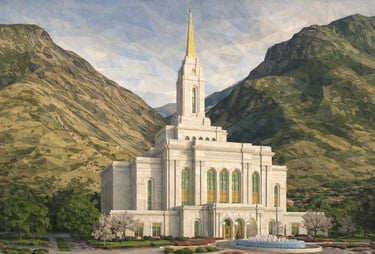
Yet something significant has been changing in recent years. Newer temples being dedicated and announced frequently lack this iconic feature. The Meridian Idaho Temple, dedicated in 2017, has no Moroni statue. The Winnipeg Manitoba Temple, dedicated in 2021, stands without the angel. The Red Cliffs Utah Temple, dedicated in 2023, rises into the desert sky with no golden figure atop its spire. In fact, the majority of temples announced and built in recent years feature no angel Moroni statue at all.
This shift is not incidental or accidental. It's not simply about architectural variety or cost considerations or aesthetic preferences for different cultural contexts. While Church leadership hasn't issued lengthy official explanations or formal announcements about the change, the pattern is clear and deliberate. The Church is moving away from the angel Moroni statue as standard temple feature, and the reasoning touches something fundamental about Latter-day Saint theology and worship.
The core issue is focus. More specifically, it's about what—or who—occupies the center of Latter-day Saint faith and worship, and how physical symbols either support or undermine that proper focus. When the most prominent, visible, and recognizable feature of LDS temples for over a century has been a statue of an angel rather than imagery or symbolism directly pointing to Jesus Christ, a theological problem emerges. The messenger has become more prominent than the message. The symbol has overshadowed the substance. A servant in the restoration narrative has received more visual emphasis than the Master whose gospel was being restored.
This isn't about diminishing the angel Moroni's important role in the Restoration. Moroni was crucial messenger who appeared to Joseph Smith, delivered the golden plates that became the Book of Mormon, and played vital role in bringing forth the fulness of the gospel in the latter days. His role is honored and important in Latter-day Saint theology and history. However, there's profound difference between honoring a messenger's role and making that messenger the most prominent visual symbol of the faith.
The question the Church appears to be addressing through this architectural shift is: What message do we send when our most visible religious symbol—the feature that dominates temple architecture and appears in countless photographs and representations—is an angel rather than something explicitly pointing to Jesus Christ? When non-members identify "the Mormon church" as "the one with the gold angel on the buildings," and when even members sometimes use the angel Moroni as primary explanatory symbol for the faith, has the symbolism accomplished its intended purpose or has it created unintended focus problem?
Understanding why new temples are being built without angel Moroni statues requires examining the history of how the statue became standard feature, the theological implications of religious symbolism and focus, what the Church has said about keeping Christ at the center, and what this shift reveals about organizational priorities and theological clarity. The change represents more than architectural preference—it represents theological course correction, ensuring that the symbols most associated with Latter-day Saint worship point unambiguously to Jesus Christ rather than to any messenger, however important that messenger might be.
SECTION 1: The History of Angel Moroni Statues on Temples
Understanding the current shift away from angel Moroni statues requires understanding how they became standard temple feature in the first place. The history reveals that far from being original essential element of temple design, the angel statue was relatively late addition that then became tradition.
The Salt Lake Temple: Where It Began
The angel Moroni statue first appeared atop a Latter-day Saint temple when the Salt Lake Temple was completed and dedicated in 1893. The temple's construction had taken forty years, and the design included elaborate symbolic architecture throughout. The statue of an angel—initially not specifically identified as Moroni in all sources—was placed atop the east-central tower, standing 12.5 feet tall and originally constructed of hammered copper covered with gold leaf.
The symbolism intended was multi-layered. The eastward-facing figure with trumpet represented the proclamation of the restored gospel to the world. The east-facing orientation connected to scriptural symbolism about Christ's second coming. The trumpet imagery drew on Book of Revelation descriptions of angels proclaiming messages. Whether the statue was originally specifically meant to represent Moroni or was more generally an angel proclaiming the gospel, it eventually became identified specifically with Moroni due to his role in the Restoration.
However, this statue on the Salt Lake Temple wasn't immediately replicated on other temples. It was feature specific to Salt Lake Temple's elaborate architectural program, not yet standard element expected on all temples.
Spread to Other Temples
As additional temples were built in the early-to-mid 20th century, some included angel statues and others didn't. The pattern wasn't consistent. Some temples built without the statue later had one added during renovations or as separate addition. The feature gradually became more standard, though not universal, with many temples from this era including the angel Moroni statue as expected element.
By the mid-20th century, the angel Moroni had become so associated with LDS temples that it was generally expected as standard feature. The golden angel became one of the most recognizable symbols of the Church worldwide. Postcards, photographs, paintings, and eventually digital images of temples almost always prominently featured the angel statue. It became shorthand visual representation for "Mormon temple" in both LDS culture and broader public consciousness.
Standardization and Proliferation
As temple construction accelerated in late 20th and early 21st centuries, the angel Moroni statue became increasingly standard. Temples built during this period overwhelmingly included the statue, often in standardized designs that could be replicated across different temples. The angel became such expected feature that temples without it seemed incomplete or unusual to many members.
This proliferation meant that by the early 21st century, there were dozens of nearly identical angel Moroni statues atop temples worldwide. The standardization was efficient and created visual consistency, but it also meant the statue became perhaps the single most prominent and recognizable symbol of Latter-day Saint faith and architecture.
The Unintended Consequence
What began as symbolic architectural feature on one temple gradually became the defining visual symbol of the entire faith. This created unintended consequence: For many people—both members and non-members—the angel Moroni statue became more recognizable and more prominently associated with the Church than any symbol directly representing Jesus Christ.
Ask random people to describe a Mormon church building, and many will mention "the gold angel on top." The angel became shorthand identifier, the most memorable feature, the element that distinguished LDS buildings from other religious architecture. In achieving this recognition, it also achieved prominence that arguably exceeded its appropriate theological weight.
For Latter-day Saints, whose official church name is "The Church of Jesus Christ of Latter-day Saints" and whose core theological claim is that they are restoring and teaching the gospel of Jesus Christ, having an angel—even the important angel Moroni—serve as primary visual symbol presents theological tension. The church is Christ's church. The gospel is Christ's gospel. The atonement that makes everything possible is Christ's atonement. Yet the most visible symbol was an angel.
When Did the Shift Begin?
The shift away from automatically including angel Moroni statues on all new temples appears to have begun gradually in the 2010s and accelerated in the 2020s. Some temples built during this period included the statue while others didn't, suggesting intentional choice rather than automatic inclusion. By the early 2020s, the pattern became clear: most newly announced and constructed temples were being designed without angel Moroni statues.
The Church hasn't issued dramatic announcement about this change or provided lengthy official explanation. The shift has been quiet, allowing the architecture to speak for itself. However, the pattern is unmistakable to anyone paying attention to temple announcements and dedications in recent years.
SECTION 2: The Theological Problem of Prominent Messenger Symbolism
Understanding why the Church is moving away from angel Moroni statues requires grasping the theological problem that prominent messenger symbolism creates. This isn't about angel Moroni being unimportant or his role being diminished. It's about maintaining proper hierarchy in religious focus and symbolism.
The Principle: Messengers Point to the Message
Fundamental principle throughout scripture is that messengers exist to point toward the message and the one who sent them—not to draw attention to themselves. Angels throughout biblical and Book of Mormon accounts consistently redirect attention from themselves to God.
When John the Revelator attempted to worship the angel showing him visions, the angel's response was immediate and clear: "See thou do it not: I am thy fellowservant, and of thy brethren the prophets, and of them which keep the sayings of this book: worship God" (Revelation 22:9). The angel explicitly rejected worship or inappropriate attention, redirecting focus to God.
John the Baptist, when asked if he was the Christ, immediately clarified his role: "I am not the Christ... He must increase, but I must decrease" (John 1:20, 3:30). The messenger's entire purpose was pointing to Christ, and he recognized that his own prominence must decrease so Christ's prominence could increase.
This pattern establishes principle: Messengers don't seek their own prominence. They point beyond themselves to the one they represent. When messengers become focal point rather than directional sign, something has gone wrong with the focus.
The Angel Moroni's Role
Moroni's role in the Restoration was crucial but explicitly as messenger. He appeared to Joseph Smith to reveal the location of the golden plates and instruct him in his prophetic mission. He was guardian of the plates and teacher preparing Joseph for the translation work. His role was essential to bringing forth the Book of Mormon and facilitating the Restoration of the gospel.
However, Moroni himself would certainly direct attention beyond himself to Jesus Christ. The Book of Mormon he helped preserve and deliver is subtitled "Another Testament of Jesus Christ." Its stated purpose is "to the convincing of the Jew and Gentile that Jesus is the Christ" (title page). Moroni's final recorded words in the Book of Mormon are explicit invitation to "come unto Christ" (Moroni 10:32).
The irony is profound: The messenger who spent his mortal and post-mortal ministry pointing people to Christ has become, through statuary and symbolism, a figure that in some ways competes with Christ for visual prominence in Latter-day Saint worship spaces.
How Symbols Shape Focus
Religious symbols aren't neutral decorative elements—they shape what people focus on and how they understand their faith. The most prominent symbols in any religious tradition direct attention, create associations, and establish what that religion emphasizes.
When Catholic cathedrals feature crucifixes prominently, it directs attention to Christ's sacrifice and suffering. When Eastern Orthodox churches display icons of Christ Pantocrator (Christ the Almighty), it emphasizes Christ's divine authority and judgment. When Protestant churches emphasize empty cross, it points to resurrection and victory over death. The prominent symbols teach theology visually.
For over a century, the most prominent symbol on LDS temples—and by extension, one of the most prominent symbols of the entire Latter-day Saint faith—has been a statue of an angel. Not Christ. Not imagery of atonement or resurrection. Not symbols directly representing Godhead. An angel.
However important Moroni's role in the Restoration, making his statue the most prominent temple feature creates symbolism that doesn't align with the theological claim that Jesus Christ is the central focus of Latter-day Saint faith.
The Misunderstanding This Creates
The prominence of angel Moroni statuary has created several levels of misunderstanding:
Among Non-Members: Many people's primary association with "Mormons" is "the church with the gold angel." When explaining Mormonism to others, people often reference the angel on the temples. This creates impression that the angel is somehow central to LDS worship, which is theologically inaccurate. The Church worships Jesus Christ, not angels, yet the symbolism suggests otherwise to outside observers.
Among Investigators: Those learning about the Church encounter the angel Moroni prominently and may receive confused impression about his role. Is he worshiped? Is he divine? Is he the focus of LDS faith? While these questions can be answered through teaching, the visual symbolism works against the verbal teaching. If Christ is central, why is an angel the most prominent feature?
Among Members: Even active Latter-day Saints can develop unbalanced focus through constant exposure to angel Moroni imagery. Children grow up with the angel as the most recognizable symbol of their faith. When asked to draw "something that represents the Church," many would draw temples with the angel statue. The visual prominence creates mental association that can, subtly, misalign focus.
The Worship Concern
While no Latter-day Saint would consciously claim to worship the angel Moroni, the prominence given to his image raises questions about where attention is directed. Worship involves more than verbal profession—it includes where we direct our focus, what we emphasize, what we make visually prominent in our sacred spaces.
When temple architecture makes an angel the most prominent feature—more prominent than any representation of Christ—it creates at minimum the appearance of misplaced focus. And appearance matters, both for how others perceive the faith and for how members themselves internalize what's most important.
The Name Change Context
This concern about proper focus became particularly acute after President Russell M. Nelson's emphasis on using the correct name of the Church: "The Church of Jesus Christ of Latter-day Saints." The name change emphasis was explicitly about ensuring Christ is recognized as central to the faith, not any nickname or secondary identifier.
Having corrected the verbal nomenclature to emphasize Christ, it became increasingly problematic that the visual symbolism—the angel Moroni statues—didn't align with the verbal emphasis. The Church was saying "We are the Church of Jesus Christ" while the most prominent visual symbol remained an angel.
The removal of automatic angel Moroni statuary from new temples can be understood as visual alignment with the verbal emphasis on Christ's centrality. The symbols are being brought into alignment with the stated theological focus.
Hierarchy of Importance
Latter-day Saint theology has clear hierarchy:
God the Father, Jesus Christ, and Holy Ghost (the Godhead)
Prophets and apostles (ancient and modern)
Other significant figures including angels like Moroni
Making a figure from category 3 more visually prominent than anything representing category 1 inverts this hierarchy symbolically. Even if everyone intellectually knows the correct hierarchy, the constant visual emphasis on angel Moroni works against maintaining that proper theological ordering in hearts and minds.
The shift away from angel Moroni statuary is really shift toward proper hierarchical emphasis in visual symbolism—ensuring that what's most important theologically is also most prominent visually.
SECTION 3: What the Church Has (and Hasn't) Said
Unlike some Church policy or practice changes that receive official announcements and explanatory statements, the shift away from angel Moroni statues on temples has happened quietly without extensive official explanation. Understanding what has and hasn't been said officially helps clarify the change and its significance.
No Dramatic Announcement
The Church hasn't issued press release declaring "We will no longer place angel Moroni statues on temples" or provided lengthy theological explanation for the architectural shift. There's been no General Conference talk specifically addressing the topic, no official statement in Church publications explaining the change, no First Presidency letter to members clarifying the new approach.
This quiet implementation reflects how the Church often handles architectural and aesthetic decisions—as practical matters that don't require extensive theological explanation or official policy statements. The temples are built, the designs are revealed, and the new pattern becomes evident without needing formal announcement.
However, the absence of dramatic announcement doesn't indicate the change is insignificant or accidental. Quite the opposite—the consistency of the pattern across multiple temples and years indicates deliberate choice reflecting considered priorities.
Context From Emphasis on Christ's Name
While specific statements about temple statuary are limited, extensive teaching about keeping Christ central provides context for understanding the architectural shift. President Russell M. Nelson's repeated emphasis on using the correct name of the Church—"The Church of Jesus Christ of Latter-day Saints"—explicitly addresses keeping Christ at the center.
In his April 2018 General Conference talk, President Nelson taught: "The Lord has impressed upon my mind the importance of the name He has revealed for His Church, even The Church of Jesus Christ of Latter-day Saints. We have work before us to bring ourselves in harmony with His will."
He later emphasized: "To remove the Lord's name from the Lord's Church is a major victory for Satan... When we discard the Savior's name, we are subtly disregarding all that Jesus Christ did for us—even His Atonement."
This emphasis on ensuring Christ's name and centrality are maintained provides theological framework for understanding why visual symbolism would also need alignment. If using nicknames that de-emphasize Christ is problematic, having visual symbols that make an angel more prominent than Christ creates similar misalignment.
Statements About Temple Symbolism
Church leaders have occasionally discussed temple symbolism more broadly in ways that illuminate current architectural choices. The general principle communicated is that everything about temples—from architecture to ordinances to symbolism—should point people to Jesus Christ and help them make and keep sacred covenants.
Elder David A. Bednar taught: "The temple is the house of the Lord. The basis for every temple ordinance and covenant—the heart of the plan of salvation—is the Atonement of Jesus Christ."
When temple symbolism and architecture are understood as meant to point to Christ and His atonement, it becomes clear why making an angel the most prominent visual feature is problematic. The symbolism should direct attention to Christ, not to messengers however important they are.
Architectural Variation Explanations
When discussing newer temple designs, Church representatives have occasionally noted that temples are being designed with sensitivity to local contexts and with variation in architectural features. This explanation is accurate but doesn't capture the full theological significance of specifically removing the angel Moroni statue.
Yes, architectural variation is appropriate and temples should reflect cultural contexts. However, the specific choice to not include the angel statue that was standard for over a century reflects more than simple preference for variation—it reflects theological recalibration about what symbols should be most prominent.
What Members Have Noticed
While official statements are limited, many members have noticed and discussed the change. Online forums, social media discussions, and informal conversations have addressed the pattern of temples without angel statues. Responses have been mixed:
Some members appreciate the change, recognizing the theological reasons for keeping Christ central. Others feel sadness at loss of familiar beloved symbol. Still others haven't particularly noticed or don't consider it significant.
The varied member responses reflect that for many, the angel Moroni statue had become deeply associated with personal temple experiences and memories. Emotional attachment to familiar symbol is understandable, even when theological reasons for change are sound.
Emphasis on Christ in Recent Teaching
Beyond the name of the Church, recent General Conference addresses and Church publications have consistently emphasized keeping Christ at the absolute center of faith and worship. This repeated emphasis creates context suggesting that any element—however traditional or beloved—that potentially competes with Christ's centrality should be reconsidered.
The removal of automatic angel Moroni statuary fits within this broader pattern of ensuring that everything about Latter-day Saint worship, teaching, and symbolism clearly and unambiguously points to Jesus Christ as the central figure of faith.
SECTION 4: Deeper Principles: Keeping Christ Central
The specific issue of angel Moroni statues on temples illustrates broader principles about how religious communities maintain proper focus and avoid allowing secondary things to become primary. These principles extend far beyond temple architecture.
The Constant Drift Toward Secondary Things
Religious history demonstrates repeated pattern of secondary things becoming primary over time. What begins as helpful symbol or practice meant to point toward central truths gradually becomes the focus itself, displacing what it was meant to support.
Early Christian church struggled with this regarding saints and icons. What began as honoring holy people and using images as teaching tools evolved in some contexts into practices that bordered on worship of the saints and icons themselves. The Reformation partly responded to perception that secondary things (relics, indulgences, saint veneration) had displaced Christ as central focus.
The Israelites in Moses's time demonstrated this pattern with the brass serpent. Originally it was God's appointed means of healing—looking to the serpent meant looking to God in faith. But later generations began worshiping the serpent itself, prompting King Hezekiah to destroy it (2 Kings 18:4). The symbol had displaced what it symbolized.
Latter-day Saints aren't immune to this drift. Anything that's helpful or symbolically significant can gradually become too prominent, taking mental and emotional space that should be reserved for Christ. This doesn't happen through conscious decision but through subtle drift over time.
How Symbols Gain Inappropriate Prominence
The process typically follows pattern: A symbol is introduced for good reason—to teach, to point toward truth, to create visual reminder of important principle. The symbol works well and becomes beloved. It appears in art, architecture, publications, and personal spaces. Over generations, the symbol becomes so familiar and prominent that it shapes how people think about their faith.
At some point, the symbol has become more prominent in consciousness than what it originally pointed toward. People recognize and reference the symbol more readily than the underlying truth. The symbol becomes the identifier rather than the direction-pointer.
This appears to be what happened with angel Moroni statuary. It began as meaningful symbol on one temple pointing toward gospel proclamation and restoration. It became standard feature on temples worldwide. Eventually it became the most recognizable visual symbol of the faith—more recognizable than any symbol directly representing Christ. At this point, the symbol had gained inappropriate prominence relative to its theological importance.
The Difficulty of Correction
Once a symbol has become deeply embedded and beloved, correcting the imbalance is challenging. People have emotional attachments to familiar symbols. They associate them with meaningful experiences. Suggesting the symbol should be less prominent or removed can feel like attack on their faith or experiences.
This emotional resistance makes sense—the symbol wasn't wrong or bad, it was just too prominent relative to its theological weight. But trying to explain "the symbol is good but it's become too important" is difficult message to communicate and harder message to receive.
The Church's quiet approach to removing angel Moroni statuary from new temples likely reflects awareness of this emotional complexity. Rather than announcing dramatic change requiring extensive explanation and potentially creating division, the change happens gradually through architectural choices that speak for themselves over time.
The Christ-Centered Principle
At core, the principle is simple: Jesus Christ must be the center of Latter-day Saint faith, worship, teaching, and symbolism. Not in theory only, but in actual practice and prominence. Anything that competes with or dilutes that central focus—however good it might be in itself—needs recalibration.
This applies to symbolism, but also to:
Teaching emphasis (are lessons primarily about Christ or about programs and activities?)
Personal worship (is worship directed to Christ or diffused across various good things?)
Time and resource allocation (does calendar reflect Christ-centered priorities?)
Church culture (do cultural traditions support or obscure Christ-centeredness?)
The angel Moroni statue issue is specific example of broader question every Latter-day Saint and the Church itself must regularly ask: Is Jesus Christ actually central, or have secondary things crept into primacy?
Signs of Proper Focus
When Christ is properly central in Latter-day Saint life and worship:
Teaching and testimony focus primarily on His divinity, atonement, and teachings
Symbolism most prominently displayed points to Him rather than to messengers or programs
Questions are answered by reference to His example and teachings
Challenges are faced through relationship with Him
Worship services orient around Him rather than becoming program performances
Personal prayers communicate with Father about relationship with Son
When secondary things have become too prominent:
Programs, activities, or cultural traditions receive more emphasis than Christ
Symbols of secondary importance are more recognizable than Christ-focused symbols
Teaching focuses on behavior compliance more than relationship with Christ
Members identify with cultural markers more than covenant relationship
Worship becomes about fulfilling assignments rather than encountering Christ
Application Beyond Statuary
While the angel Moroni statue is visible concrete example, the principle applies to everything in Latter-day Saint life. Members individually and the Church institutionally must continually assess: Is Christ actually central, or have we allowed other good things to displace Him?
This might mean examining:
Whether church service has become more about fulfilling callings than serving Christ
Whether temple attendance focuses on count rather than covenant relationship
Whether testimony bears witness primarily to programs rather than to Christ
Whether traditions and culture have become more important than gospel principles
The removal of angel Moroni statues from new temples represents the Church applying this principle to visible architecture. The invitation to members is to apply the same principle to less visible but equally important areas of faith and practice.
SECTION 5: What This Change Reveals About Church Priorities
The decision to build temples without angel Moroni statues, despite over a century of tradition, reveals important things about how the Church approaches tradition, symbolism, and theological emphasis. Understanding what this change demonstrates helps members appreciate both this specific decision and broader patterns of how the Church operates.
Willingness to Change Tradition When Theology Requires It
The most significant revelation is that the Church is willing to change even beloved, long-standing traditions when theological considerations require it. The angel Moroni statue had been standard temple feature for over a century. It appeared on dozens of temples worldwide. It was deeply embedded in member consciousness and non-member recognition of the Church.
Changing this tradition required acknowledging that something widely loved and historically significant was nonetheless problematic from theological perspective. Many institutions would hesitate to make such change, prioritizing continuity and avoiding potential controversy. The Church's willingness to make the change demonstrates that theological correctness—specifically, keeping Christ central—takes priority over traditional practice.
This principle has precedent. The 1978 revelation extending priesthood to all worthy male members regardless of race changed practice that had existed for over a century. The 2018 emphasis on correct name of the Church changed decades of accepted nickname usage. The consolidation of Sunday meeting schedule from three hours to two changed pattern familiar to generations. In each case, the Church demonstrated willingness to change practice when revelation or theological clarity indicated the change was needed.
Prioritizing Substance Over Symbolism
The change also reveals commitment to ensuring symbolism serves theology rather than allowing symbolism to shape theology inappropriately. The angel Moroni statue was powerful symbol with multiple legitimate meanings. But when symbol's prominence began working against core theological focus on Christ, the symbol was reconsidered.
This demonstrates healthy relationship between symbols and substance. Symbols serve important purposes—they teach, they remind, they create visual beauty and meaning. But symbols must serve theological truth, not compete with or obscure it. When symbols become more important than what they symbolize, correction is needed.
Many religious traditions have struggled to maintain this proper relationship, with symbols and rituals sometimes becoming ends in themselves rather than means toward spiritual truth. The Church's willingness to recalibrate symbolism to better serve theological truth shows institutional health and proper priorities.
Quiet Implementation Over Dramatic Announcement
The decision to implement this change quietly rather than through dramatic announcement reveals approach to change that trusts members to observe and understand without needing extensive explanation. Not everything requires official statement or lengthy justification. Sometimes the change speaks for itself to those paying attention.
This approach has advantages:
It allows change to happen without creating unnecessary controversy
It respects member intelligence to observe and understand
It prevents change from becoming bigger issue than it needs to be
It allows those with emotional attachment to beloved symbol to adjust gradually
However, it also has limitations—many members may not notice the change or understand its significance without explanation. Articles like this one serve to clarify what's happening and why for those seeking understanding.
Long-Term Thinking
The change demonstrates long-term thinking about Church symbolism and focus. The angel Moroni statue problem wasn't crisis requiring immediate attention. Temples with the statue continued functioning perfectly well. Members weren't being led astray into angel worship.
However, the Church leadership recognized that over decades and centuries, cumulative effect of having an angel as most prominent symbol could contribute to focus drift. Making the change now, even though it's not addressing immediate crisis, demonstrates thinking about what symbolism will mean fifty or a hundred years from now.
This long-term perspective is characteristic of Church leadership operating with prophetic vision beyond immediate circumstances.
Message to Members
The change sends message to members: "We are watching to ensure that everything about this Church—including architecture and symbolism—properly points to Jesus Christ. When something doesn't align with that focus, even if it's traditional and beloved, we'll make corrections."
This message invites members to apply the same principle in personal lives: examining whether traditions, practices, or focus areas in their own discipleship properly emphasize Christ or whether good secondary things have become too prominent.
Cultural vs. Doctrinal Flexibility
The change also demonstrates the Church distinguishing between cultural elements and doctrinal requirements. The angel Moroni statue was cultural tradition that developed over time, not doctrinal requirement or revealed architectural element. Recognizing this distinction allows appropriate flexibility in cultural elements while maintaining firmness on doctrinal truths.
This distinction is important for global Church navigating diverse cultures. What works symbolically in one culture may not in another. Being willing to adjust cultural elements—including architectural traditions—allows the Church to maintain theological clarity across diverse contexts.
SECTION 6: Practical Implications for Members
Understanding why temples are being built without angel Moroni statues has practical implications for how Latter-day Saints approach symbolism, tradition, and focus in their personal religious lives. The architectural change invites broader reflection and application.
Examining Personal Symbols and Focus
Members can ask themselves: What are my most prominent personal religious symbols? What imagery dominates my home, my social media, my personal identification with the faith? Do these symbols properly point to Christ, or have secondary things become too prominent?
This isn't about removing all symbols except crucifixes or creating standardized "Christ-only" decor. Rather, it's about examining whether the cumulative effect of personal symbolism maintains Christ as central focus or whether other good things—cultural traditions, church programs, beloved practices—have become more prominent than Christ in daily consciousness.
Someone might realize their home has prominent angel Moroni imagery but limited representation of Christ. Or that their church-related social media posts emphasize programs and activities more than Christ's teachings and atonement. Or that their testimony-bearing focuses on church truth claims more than Christ's divinity and mission. The temple statuary change invites similar personal inventory.
Responding to the Change
Members who love the angel Moroni statue and feel sadness at its absence from newer temples can:
Acknowledge the emotional attachment. It's okay to feel loss of familiar symbol while intellectually understanding theological reasons for change. Emotions about beloved symbols are valid even when change is appropriate.
Recognize what the statue represented. The removal doesn't mean Moroni's role is diminished or that the Restoration is less important. It means the visual hierarchy is being corrected to match theological hierarchy.
Appreciate the correction. Even if change feels sad, recognizing that the Church is ensuring proper focus on Christ is ultimately good thing worth supporting.
Apply the principle personally. Use the change as invitation to examine personal spiritual life for similar focus drift that needs correction.
Teaching Children About the Change
Parents can use the architectural change as teaching opportunity:
"You'll notice some newer temples don't have the angel Moroni statue on top. That's because the Church wants to make sure we remember that temples are about Jesus Christ, not about angels. The angel Moroni was an important messenger who helped Joseph Smith, but we worship Jesus Christ, not angels. So the Church decided that our temple buildings should point to Jesus more clearly."
This explanation honors Moroni's role while teaching proper theological hierarchy and explaining the architectural change in age-appropriate way.
Avoiding Criticism of Older Temples
The change doesn't mean older temples with angel Moroni statues are wrong or that they should all be retrofitted. The statues on existing temples can be understood in their historical context as symbols that served purposes but that the Church is now reconsidering for new construction.
Members should avoid creating division by criticizing temples that have the statue or suggesting they're somehow inferior. The issue is forward-looking about new temple design, not condemnation of existing beautiful temples.
Broader Application: Secondary Things Becoming Primary
The invitation is to examine all areas of faith life for places where secondary things have become too prominent:
Is church service about fulfilling assignments or serving Christ?
Is scripture study about checking boxes or encountering God?
Is temple attendance about count or covenant?
Are traditions maintained because they're meaningful or just because they're familiar?
Do cultural expectations sometimes overshadow actual gospel principles?
The angel Moroni statue issue is specific example of broader pattern that affects every aspect of discipleship. Members can use this concrete architectural change as prompt for examining less visible but equally important areas where focus might need recalibration.
CONCLUSION
The decision to build new Latter-day Saint temples without angel Moroni statues represents more than architectural preference or aesthetic variation. It reflects theological recalibration ensuring that the most prominent symbols associated with the faith properly point to Jesus Christ rather than to messengers, however important those messengers might be.
For over a century, the golden angel atop temple spires served as the most recognizable visual symbol of the Church. The statue appeared in countless photographs, paintings, and member consciousness as the defining feature of LDS temples. However, this prominence created unintended theological problem: the messenger became more visually prominent than the message, an angel more recognizable than any symbol directly representing Christ.
The shift away from automatically including angel Moroni statues on new temples addresses this focus problem. It aligns visual symbolism with verbal emphasis on Christ's centrality. It ensures that when people look at Latter-day Saint temples, the message they receive points unambiguously to Jesus Christ—not to angels, programs, cultural markers, or anything else that might compete for primary focus.
This change reveals important things about Church priorities: willingness to change beloved traditions when theology requires it, commitment to substance over symbolism when the two are in tension, and long-term thinking about what messages current choices send to future generations. The quiet implementation without dramatic announcement reflects trust in members to observe and understand while avoiding unnecessary controversy about architectural decisions.
For individual members, the change invites broader examination. If the Church is ensuring its most prominent symbols properly point to Christ, members can ask themselves whether their own spiritual lives maintain similar proper focus. Have secondary things—however good they are—become too prominent? Does personal symbolism, testimony, teaching, and practice keep Christ truly central, or have other elements drifted toward primacy?
The principle extends far beyond temple architecture. It touches everything about how Latter-day Saints practice their faith: What receives the most attention? What's most prominently displayed? What gets discussed most frequently? What shapes identity most strongly? If the answers to these questions are anything other than "Jesus Christ," recalibration may be needed.
The angel Moroni played crucial role in the Restoration. His message—literally, the Book of Mormon he helped preserve and deliver—testifies of Jesus Christ. The ultimate honor to Moroni's mission is ensuring that mission accomplishes its purpose: pointing people to Christ. When the statue representing Moroni became more prominent than Christ himself, it ironically worked against Moroni's own message and purpose.
New temples rising without the angel statue send clear message: This is the Church of Jesus Christ. The temples are houses of the Lord. The gospel is Christ's gospel. And the symbols—architectural and otherwise—should make that unmistakably clear.


Connect
Feel free to follow my socials anytime
info@felmorewritings.com
© FelmoreWritings2025. All rights reserved.